
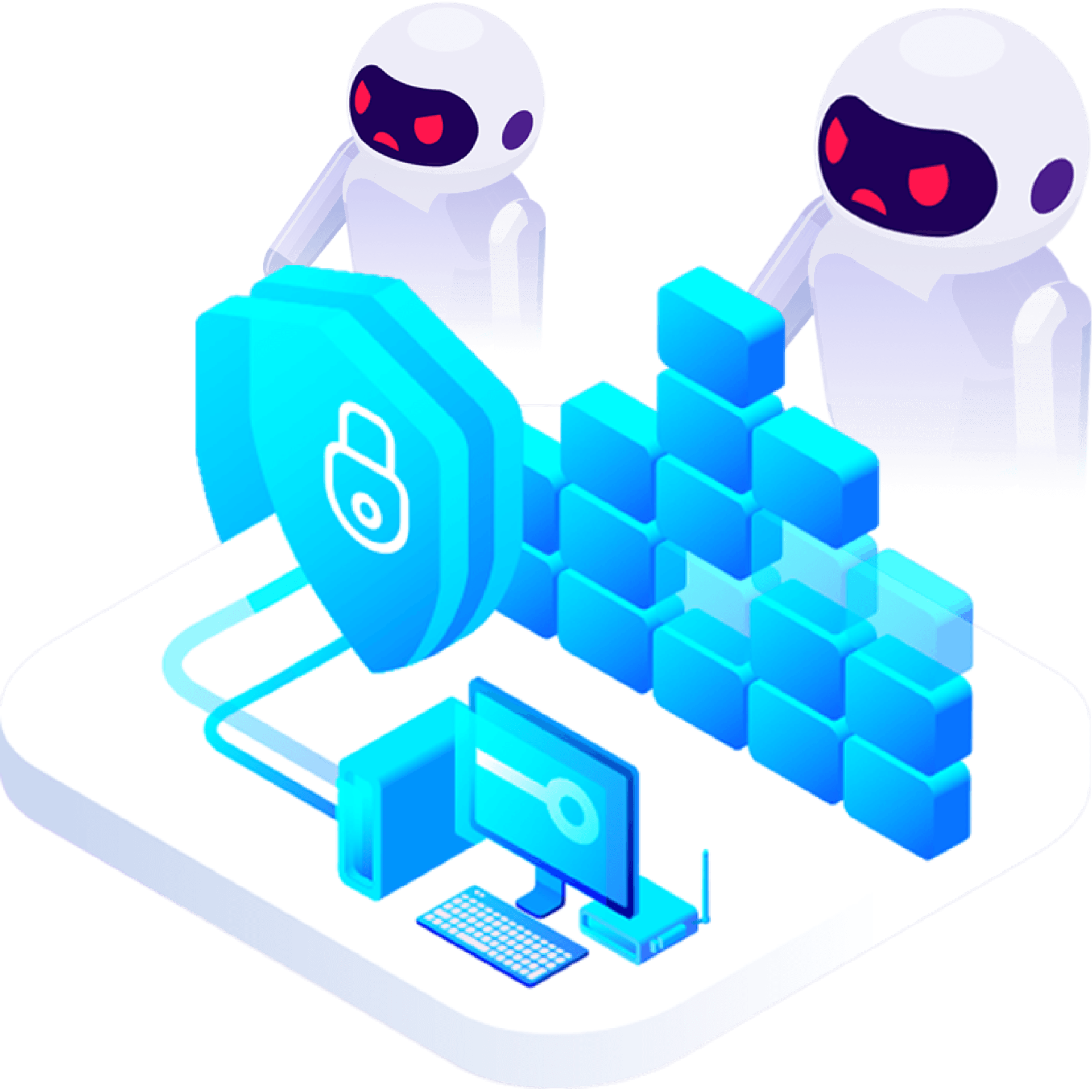
Advanced protection against bots in your cloud applications
Nowadays, bots are an essential part of the Internet. Some are useful, like search engines or customer service chatbots, but others are malicious, designed to attack applications, steal data, overload services, or even compromise user accounts.
In a world where more and more enterprise applications live in the cloud, bot protection has become a priority to ensure security and trust in digital services.
What is a Bot?
Before we dive into how we can protect ourselves from bots, let’s briefly review. According to a definition provided by AWS, a bot is an automated software application that performs repetitive tasks on a network. This application follows specific instructions to mimic human behavior, but faster and more accurately.
In this sense, we must clarify that not all bots are necessarily bad. There are 'good' bots like chatbots, web crawlers used by search engines like Google, monitoring bots, and others.

Why are malicious bots dangerous?
Just as there are 'good' bots, there are also malicious bots that can pose multiple risks to your applications:
- Account fraud: massive login attempts (credential stuffing or brute force).
- Information theft: scraping of sensitive or private data.
- Denial of Service (DoS): overloading infrastructure.
- Price or inventory manipulation in e-commerce applications.
- API abuse in critical systems.
- Vulnerability scanning on your application.
Failing to prevent them can cause these attacks to quickly escalate, affecting both user experience and company reputation.
Advanced strategies for bot protection
Now that we have some context on what a bot is and why we should prevent them, let’s explore some strategies that can help keep our applications and infrastructure secure.
An effective strategy against bots on AWS combines robust authentication, API protection, and native cloud tools.
1. Strengthened authentication and validation
- Multi-Factor Authentication (MFA): prevents brute force attacks on admin or user accounts.
- Amazon Cognito: protects user login with MFA and contextual risk analysis.
- CAPTCHAs or human validations: useful for forms or critical registration flows.
2. API Protection
- Amazon API Gateway: allows configuration of rate limiting, throttling, and API Key or JWT validations.
- AWS WAF integrated with API Gateway: blocks automated request patterns.
- AWS CloudTrail + CloudWatch: monitor suspicious access to your endpoints.
3. Web Application Firewalls (WAF) and bot control
The key component for advanced bot protection is AWS WAF, especially with the Bot Control module.
- AWS WAF (Web Application Firewall): inspects HTTP/HTTPS traffic and applies rules to block threats.
- Bot Control for AWS WAF: identifies and blocks common and automated bots without affecting legitimate ones.
- Managed Rule Groups: preconfigured sets of rules managed by AWS and partners to protect against SQLi, XSS, and automated traffic.
- AWS Shield Advanced: additional protection against large-scale DDoS attacks at the network and application layer.
Implementing an anti-bot architecture on AWS:
1. Place your application behind CloudFront or ALB
- Distribute traffic and reduce direct exposure to the backend.
2. Associate an AWS WAF Web ACL
- Configure managed rules (AWSManagedRulesBotControlRuleSet, IPReputation, CommonRuleSet).
3. Enable Bot Control and Logging
- Monitor metrics in CloudWatch and export logs with Kinesis Firehose for detailed analysis.
4. Add Rate Limiting in API Gateway or Application Load Balancer
- Prevent endpoint abuse or authentication overload.
5. Combine with AWS Shield Advanced and Route 53
- Achieve end-to-end protection from DNS to the application layer.
Key best practices
Finally, here are some key practices that can help maintain the security of our workloads:
- Implement layered protection, do not rely on a single measure.
- Continuously monitor your traffic and endpoints.
- Educate your development teams about the risks of malicious automation.
- Adapt your defenses: bots evolve, so must your strategy.
The fight against bots is not about blocking them all, but about distinguishing between useful and harmful ones, applying intelligent and scalable security measures. With the right tools in AWS, and a Zero Trust strategy extended to application traffic, your company can keep its cloud applications secure and available.
Want to take your application security to the next level? Write to us at mkt@evolvenx.com and let’s design a solution tailored to your environment and needs.
References
- 2025, What is a bot? available at https://aws.amazon.com/es/what-is/bot/