

CloudFormation as a Competitive Advantage: Reproducible and Secure Infrastructure
When we start using the AWS cloud, it's common to set up services manually through the console: a virtual machine, a bucket to store files, a database… and it works. The problem arises when we need to do the same in another environment (testing, production, etc.) or when the team grows and someone else needs exactly the same setup.
That's where CloudFormation comes in.
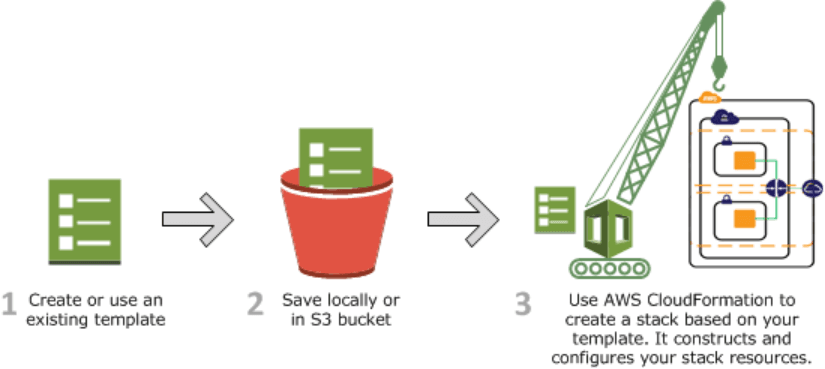
CloudFormation is an AWS tool that lets us describe everything we want in our infrastructure using a text file. That file becomes a kind of 'recipe,' and AWS takes care of building everything for us: servers, networks, databases, permissions, and whatever else is needed. Instead of clicking through the console every time, you just use the recipe and you're done.
What problem does it solve?
- Time: Imagine you need 10 identical servers. Setting them up one by one would take hours, but with CloudFormation, you can do it in minutes.
- Human error: Sometimes we forget to check a box or configure a detail. With CloudFormation, everything is documented in the file and created the same way each time.
- Repeatability: You can have the same environment in development, testing, and production without strange differences.
- Teamwork: If someone else on the team needs the same infrastructure, just share the template.
Why is it important?
Today, companies need to move fast and stay consistent. It's not just about 'having a server in the cloud,' but about being able to create and recreate full environments in minutes.
With CloudFormation:
- You're not dependent on 'who set up what.'
- Everything is documented.
- You can scale your infrastructure up or down in a controlled way.
In short: it's like going from cooking by memory to following a clear recipe that anyone can replicate.
Basic things to get started
- Templates: You're not dependent on 'who set up what.'
- Stack: is the set of resources created from your template. If you delete the stack, all those resources are deleted too.
- Resources: each thing you want to create (an S3 bucket, an EC2 instance, an RDS database).
- Parameters: let you add flexibility to your recipe. For example, making the server name configurable.
Simple example (yaml): an S3 bucket
Example.yml
AWSTemplateFormatVersion: "2010-09-09"
Description: "My first bucket with CloudFormation"
Resources:
  MyBucket:
    Type: AWS::S3::Bucket
    Properties:
      BucketName: my-first-example-bucket
With just this file, AWS automatically creates your bucket.
Follow these best practices:
- Start simple: Don’t try to build a complex system with your first template. Start with a basic resource like a bucket or virtual machine.
- Version your templates: save them in GitHub or another repository, so you can roll back if something goes wrong.
- Test small: before deploying to production, test in a simpler environment to make sure it works.
- Document: even if the template is clear, a few comments always help others understand what it does.
CloudFormation isn’t just for cloud experts; on the contrary, it’s a way to make your work easier and more organized from the start. If you want to avoid repeating manual setups, wasting time, or making mistakes, it’s worth learning the basics.
Think of CloudFormation as your personal assistant that builds infrastructure for you by following your instructions. You just write the recipe, and it takes care of the rest.
References
- Amazon Web Services, Inc. (n.d.). What is AWS CloudFormation? In AWS CloudFormation User Guide. Retrieved September 15, 2025 from https://docs.aws.amazon.com/AWSCloudFormation/latest/UserGuide/Welcome.html
- Amazon Web Services, Inc. (2024). How AWS CloudFormation works. In AWS CloudFormation User Guide. Retrieved September 15, 2025 from https://docs.aws.amazon.com/AWSCloudFormation/latest/UserGuide/cloudformation-overview.html
- Amazon Web Services, Inc. (2024). Best practices for CloudFormation. In AWS CloudFormation User Guide. Retrieved September 15, 2025 from https://docs.aws.amazon.com/AWSCloudFormation/latest/UserGuide/best-practices.html
- Amazon Web Services, Inc. (2024). Security best practices for CloudFormation. In AWS CloudFormation User Guide. Retrieved September 15, 2025 from https://docs.aws.amazon.com/AWSCloudFormation/latest/UserGuide/security-best-practices.html
- Amazon Web Services, Inc. (2024). AWS CloudFormation – Automate infrastructure on AWS. In Amazon Web Services. Retrieved September 15, 2025 from https://aws.amazon.com/cloudformation/